In recent years, there’s been an uphill trajectory in the use of modern methods of construction (MMC) as the industry grapples with trying to meet the Government’s ambitious building targets.
Traditional construction hasn’t always been able to deliver the increased outputs required to keep up with demand, particularly within the housing sector. This, alongside the imminent skills shortage and a renewed focus on environmental savings, means that MMC has increased in popularity.
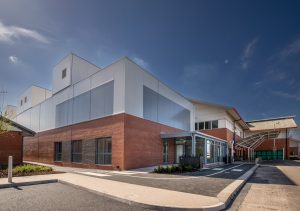
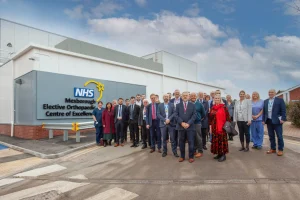
However, it’s not just the housing sector that can be helped by MMC. With our NHS facing perhaps the greatest challenge in its history as a result of the COVID-19 pandemic, many healthcare decision-makers are open to exploring MMC alternatives.
With a significant backlog in routine procedures, NHS Trusts can employ MMC as a progressive solution to capacity issues in 2021, but what exactly does this mean?
What is MMC?
There are several different types of MMC, including (but not limited to):
Modular construction: characterised by the off-site design and manufacturing of volumetric units, which are assembled under factory conditions and pre-fitted with partitions, doors, fixtures, fittings and M&E .
Pods: These are factory-assembled units, such as kitchens and bathrooms, that are designed to slot into existing structures. The manufacturing of pods is similar to the methods used in modular construction and can be manufactured from timber, steel or concrete to match the existing building.
Panelised construction: This method involves the manufacturing of flat panels under factory conditions. The panels are assembled on-site usually incorporated into a steel frame, and can form internal or external walls. In some instances, the panels can be fitted with 1st and 2nd fix M&E.
Using MMC in 2021
MMC has been known to unlock a range of benefits for the housing sector, including reducing the overall costs of projects.
Some of the other benefits are:
Speed: homes delivered using MMC are manufactured offsite with less disruption than onsite construction, so can be delivered quicker. The factory environment also means external factors, such as bad weather, do not cause delays.
More sustainable and environmentally-friendly: homes built using MMC have the potential to contribute significantly to the reduction of carbon emissions through greater precision in the manufacturing process. This can lead to more energy-efficient buildings and less construction waste.
From housing to healthcare and beyond
MMC was originally used to accelerate the amount of housing being built to keep up with demand, but that is not all these innovative solutions can be used for. Our NHS is under increasing pressure and MMC could be better utilised across the healthcare sector to deal with ongoing pressures. Modular construction, in particular, offers a host of benefits for the healthcare sector, as modules can be hired as short or long-term solutions.
Modular buildings can be viewed as permanent or temporary solutions and can be considered ‘futureproof’ investments since they can be remodelled or relocated in the future, long after the COVID-19 pandemic draws to a close. They can be available for hire immediately through rental or Managed Service Agreements, with no capital outlay. This gives NHS Trusts piece of mind that the facility is looked after by experienced professionals and allows hospitals to continue providing the highest standard of care. Most appealingly, they can be manufactured, installed and ready for use in a matter of weeks, with minimal works required on the hospital site.
Offsite construction also comes with added benefits in the current climate. This type of approach to construction is well-suited to allowing for social distancing measures for workers because site presence is so minimal. Modules are designed, developed and quality inspected in a controlled factory environment, where compliance with government guidance can be effectively maintained. This means limited time on-site, which also ensures minimal disruption to the day-to-day activity of the hospital, allowing healthcare staff to continue working without compromising patient care.
Using MMC in 2021
Unquestionably, MMC is coming into its own and will likely gain prevalence in construction delivery in 2021, helping builders, developers, NHS Trusts, housing associations and funders to achieve their targets and objectives.
With this, it’s important to be aware of the process and its widely-accessible benefits. As we look to the future, we must not only overcome the after-effects of the COVID-19 pandemic, but also review the way we approach construction from an environmental point of view.
MMC, and in particular the off-site construction of modular buildings, could be a cost and time effective way of supporting our health service to meet current and future challenges. The time has come to consider MMC as a viable solution to the NHS capacity crisis and could be a vital source of support in the coming months and years.