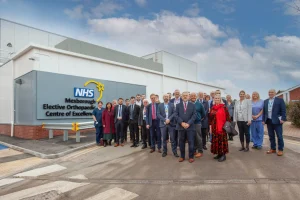
The New Hospital Programme promises to transform NHS infrastructure with a commitment to deliver 46 hospital schemes across three consecutive waves of construction running through to 2039. But for Trusts waiting for their new hospitals, the gap between today’s ageing estate and tomorrow’s modern facilities is currently measured in years, not months. With wave 2 not beginning construction until 2032 at the earliest, keeping services running safely in ageing, overstretched facilities is an increasing challenge.
Modular facilities offer a rapidly deployable and flexible alternative during this waiting period. In this article, we explore the capacity pressures Trusts face during long-term redevelopment and how a well-planned interim estates strategy can keep services running safely and efficiently whilst the New Hospital Programme progresses.
Understanding the Capacity Challenge During Long-Term Redevelopment
For Trusts on the New Hospital Programme, maintaining services whilst waiting is not a short-term disruption but a sustained operational challenge spanning several years. Many are operating in facilities that have long outlived their intended lifespan, yet services must be maintained, patient flow protected, and safety standards upheld. Demand for services is at an all-time high, and maintenance issues are mounting, all whilst the new hospital remains years away.
Why Trusts Face Increased Pressures While Major Infrastructure Projects Progress
Major redevelopment work can cause significant disruption well before patients enter a new building. If the new hospital is constructed on the same site as an existing one, clinical departments are often required to use temporary facilities that may be poorly equipped to support them, as they need to vacate space for demolition and construction activities.
This displacement can place mounting strain on frontline staff, shrink clinical capacity, and increase the likelihood of disruptions to patient flow across the hospital.
The Risks of Relying on Ageing Clinical Estate
We’ve written previously about the problems caused by outdated clinical facilities, and for Trusts waiting on the New Hospital Programme, those problems don’t go away. If anything, the pressure to keep ageing facilities operational for longer only compounds the risk. Deferred planned maintenance becomes increasingly difficult to justify when a new hospital is on the horizon.
However, the effects of inaction are experienced immediately. Trusts may find themselves in a tricky position: unable to invest heavily in facilities they are replacing, yet unable to ignore their growing problems, where left unaddressed, the result is increased facility downtime, a cycle of reactive maintenance, and the very real risk of unplanned closures.
How Modular Facilities Provide Rapid, Flexible Capacity
Operating Theatres and Wards can’t simply be taken offline to make way for construction, as it could be years before the new facilities are ready, so capacity needs to be maintained elsewhere on the estate.
Modular facilities are designed precisely for these situations, delivering state-of-the-art capacity quickly on an alternate site such as a courtyard or car park, without the lengthy procurement and construction timelines that make traditional builds impractical.
Fast Deployment with Minimal Disruption
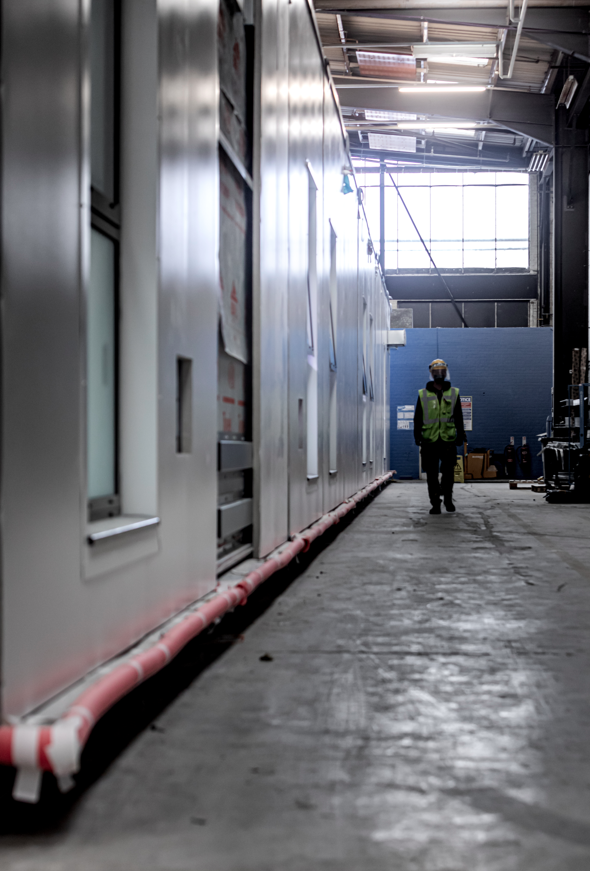
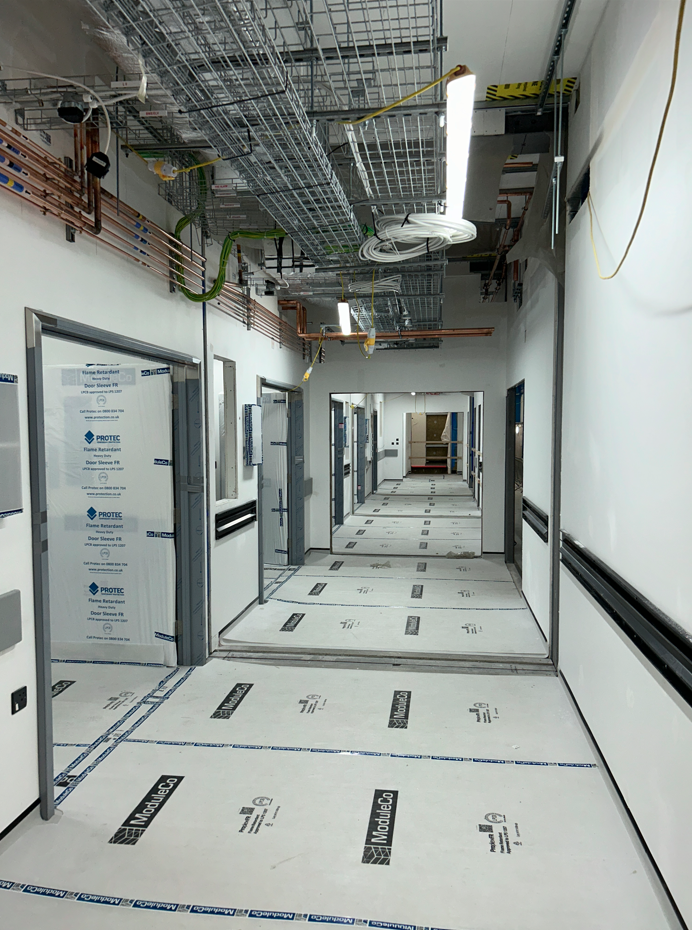
Because our modular facilities are manufactured to 90% completion off-site, on-site installation and commissioning typically take weeks rather than months. For a Trust needing to decant services due to live construction work, or responding to an unexpected closure, this makes the difference between a managed transition and serious disruption to patient services.
High-Spec Permanent Facilities That Can Be Returned or Replaced
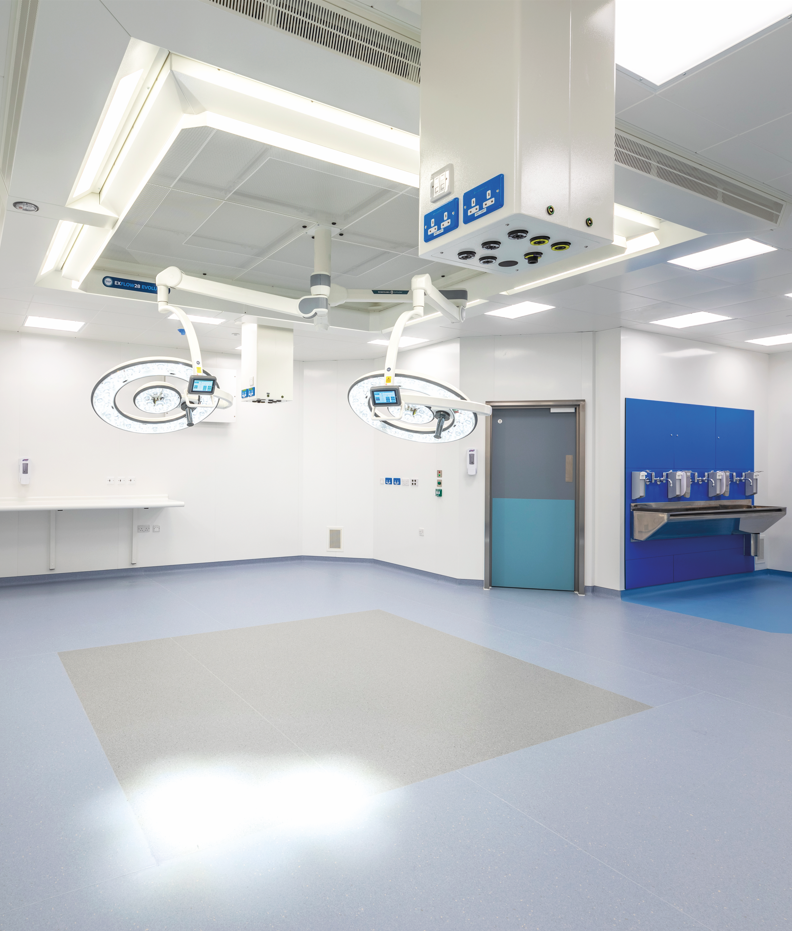
A common misconception is that modular facilities for decant or temporary requirements are inferior in terms of build quality. In reality, these are permanent grade, full-specification buildings, designed and built to the same HBN and HTM standards expected of any permanent NHS clinical environment.
The key difference is flexibility, once the facility is no longer required, it can be removed or repurposed elsewhere rather than becoming a fixed asset on an estate that no longer needs it.
How Flexible Hire Solutions Help Bridge the Gap
For Trusts managing the wait in their ageing estate for the new hospital they’ve been promised, hire solutions offer a practical and financially sensible route to maintaining clinical capacity without the commitment of a permanent purchase. With capital budgets already under pressure, the ability to access high-specification facilities utilising revenue budgets becomes increasingly attractive.
Why Hiring Modular Facilities Makes Sense
Hiring removes the long-term commitment that comes with ownership, making it a natural fit for requirements where the end date is known, even if it’s still some years away. Trusts can also choose how much responsibility they take on. A Managed Service Agreement (MSA) places maintenance and compliance with the provider, taking meaningful pressure off an already stretched Estates Team, whilst self-managed hire remains an option for those with the in-house resource to do so.
For a Trust that needs additional capacity now but won’t need it indefinitely, hire is often the most straightforward and cost-effective route.
Using Hire to Maintain Continuity During Decant, Refurbishment or Unexpected Closures
For Trusts managing the transition period before their new hospital is delivered, whether that involves decanting services, taking departments offline, or responding to unexpected pressures on an ageing estate, hire provides the flexibility to maintain continuity of service throughout.
With the New Hospital Programme timeline potentially subject to further change, having access to facilities that can be extended if a programme is delayed and removed when it finally completes means Trusts are never left short of capacity or locked into an asset they no longer need.
Building a Resilient Interim Estates Strategy
For Trusts operating during major estate redevelopment as part of the NHP, the cost of simply waiting is significant. Every year spent in ageing, dilapidated facilities is another year of mounting maintenance bills, reactive repairs, unplanned closures, and the cumulative negative impact this can have on staff, patients, and services.
A proactive Interim Estates Strategy doesn’t just manage those pressures; it actively reduces them, ensuring that the period between now and the opening of a new hospital is handled in a way that protects both clinical capacity and the people who depend on it.
Combining Hire, Managed Service Agreements and Pulse Models for Maximum Flexibility
No two Trusts face the same pressures, and the right approach will depend on where a Trust is in its redevelopment journey, what its available clinical capacity looks like, and how much certainty it has over timelines.
Hire, MSA’s, and Pulse give hospital teams the ability to structure a solution that genuinely reflects their situation rather than fitting around a rigid finance structure. As redevelopment programmes evolve and circumstances shift, that flexibility becomes less of a convenience and more of a necessity.
Ensuring Patient Safety and Flow Whilst Future Hospitals Are Under Development
The New Hospital Programme will, in time, deliver a transformative new environment for NHS care. But the years between now and completion carry their own weight of responsibility. Patient safety cannot be deferred, and Trusts remain fully accountable for the standards they deliver throughout the redevelopment period, regardless of the condition their estate is in.
A well-structured strategy, built around the right modular solutions and procurement models, ensures that clinical capacity, patient flow and care quality are protected at every stage of the construction programme, not just when the new building finally opens its doors.
The programme’s development represents a genuine opportunity to transform the NHS estate, but for Trusts in the middle of that journey, the challenge is managing today whilst planning for tomorrow. Modular facilities, flexible hire, and a well-structured interim estates strategy won’t accelerate the build programme, but they can ensure that the years spent waiting don’t come at the cost of patient safety, clinical capacity, or staff wellbeing.
If your Trust is navigating the pressures of long-term redevelopment and would like to explore how ModuleCo Healthcare can support your interim estates requirements, get in touch with our team today.