Sustainability is no longer optional in healthcare construction. Hospitals and clinics are under pressure to reduce carbon emissions, cut waste, and improve energy efficiency without compromising patient care. The NHS alone is responsible for around 4% of the UK’s total carbon footprint, which has led to a shift towards greener building solutions.
Modular design offers a practical way to meet these demands while delivering high-quality, flexible facilities. This is through faster delivery, lower carbon impact, and the ability to adapt spaces as healthcare needs evolve.
What Is Modular Design in Healthcare?
Modular design in healthcare is when prefabricated buildings, or sections of them, are built off site and assembled on location. Each module is manufactured in a controlled environment before being installed on-site in a shorter timeframe than traditional construction, helping healthcare spaces expand with less disruption.
This method produces fully functional healthcare facilities that meet strict clinical standards, from infection control to structural safety. Unlike traditional construction, modular buildings are designed to evolve with changing healthcare needs, providing flexibility without the need for complete rebuilds.
How It Works for Clinics and Hospitals
Clinics and hospitals benefit from modular design by gaining speed, scalability, and cost control. Prefabricated units can be configured for different clinical functions, including operating theatres, wards, and outpatient areas. Because up to 90% of the building process occurs offsite, onsite activity is reduced, cutting down on noise, waste, and downtime.
Modules are also designed for easy integration with existing infrastructure and can come with maintenance programmes, making them suitable for urban hospitals with limited space. This adaptability allows healthcare providers to expand capacity quickly while maintaining care continuity.
Why Modular Design Works for Sustainability
Modular construction delivers sustainability gains that traditional methods struggle to match. By using precise manufacturing techniques and streamlined logistics, the environmental footprint of new healthcare facilities can be significantly reduced.
Reduced Waste and Resource Efficiency
One of the main advantages is reduced construction waste. Factory-based production allows materials to be ordered accurately and reused where possible, minimising surplus. Research shows that modular construction can cut material waste by up to 83% compared to conventional methods.
Controlled manufacturing environments also improve material efficiency, reducing the likelihood of defects and rework. This supports circular economy principles, with some modular buildings designed for disassembly and reuse. When it comes to how long a modular building lasts, many of these facilities remain in use for 30 to 50 years with components that can be refurbished or recycled at end of life.
Energy-Efficient Materials and Systems
Modular healthcare buildings often incorporate energy-efficient materials and systems as standard. High-performance insulation, triple glazing, and low-energy HVAC systems are common features. These choices reduce operational energy demand, cutting both emissions and running costs.
The controlled factory setting also ensures better quality control of energy-efficient components, with buildings often achieving 20% lower energy use than those built traditionally. Combined with renewable energy options like solar panels, these buildings are positioned to meet and exceed current sustainability targets.
Green Builds That Cut Carbon and Cost
Sustainable modular design with proper lifespans helps healthcare providers reduce carbon emissions and manage budgets more effectively. Shorter construction times mean less energy use on site, and reduced transportation of materials lowers associated emissions. Studies suggest that modular construction can lower embodied carbon by up to 45%.
Many healthcare organisations ask what is the lifespan of a modular building when considering sustainability credentials. Modern modular buildings offer comparable lifespans to traditional structures, but with the added benefit of upgradability. Components can be swapped or enhanced without full-scale demolition, further reducing embodied carbon.
Real-World Examples
Several NHS Trusts have adopted modular builds to achieve sustainability goals. For example, Birmingham Dental Hospital installed a full dental operating theatre, recovery, and ancillary space to help provide much needed dental care for children while keeping carbon production low.
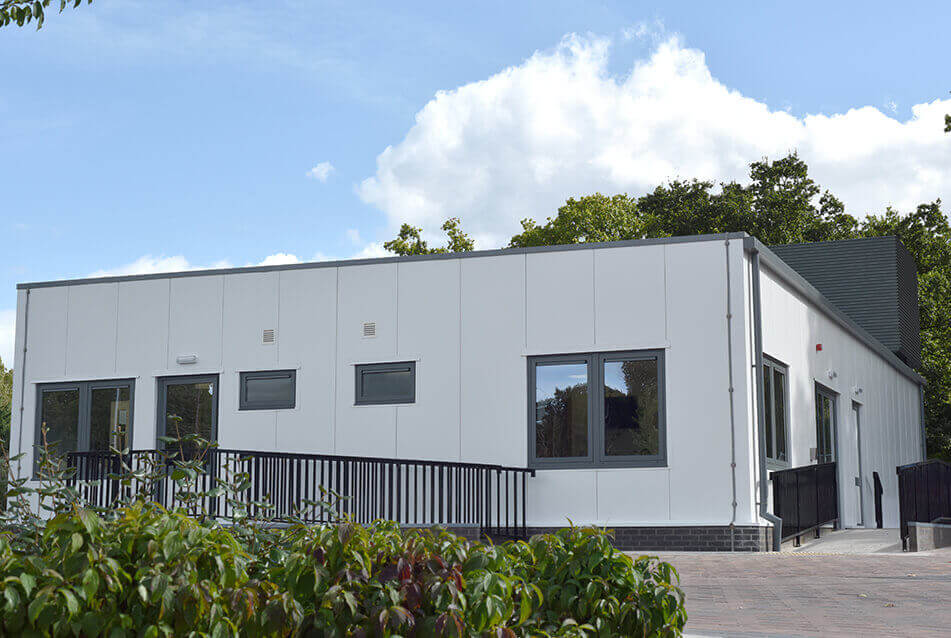
Internationally, modular healthcare facilities in Scandinavia incorporate timber-based structures, reducing reliance on carbon-intensive materials like concrete and steel. Others integrate green roofs and rainwater harvesting to improve environmental performance.
All of this comes together to show that modular healthcare facilities are not just temporary solutions, but long-term assets designed with sustainability in mind.