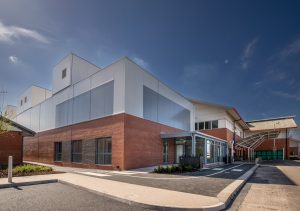
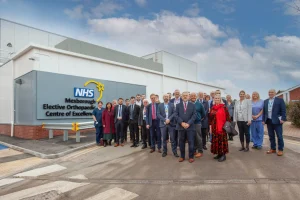
As diagnostic demand across the NHS continues to grow, hospitals are under increasing pressure to expand capacity without interrupting critical services. Imaging departments are particularly affected, with MRI and CT scanners in near-constant use. Upgrading these areas using traditional methods can mean months of disruption, restricted access, and reduced patient throughput.
Modular construction offers a faster, more predictable way to deliver high-quality diagnostic facilities while keeping services running. Modern modular imaging suites are designed to match the technical, regulatory, and environmental standards of permanent hospital buildings.
A growing body of research supports this approach. A 2024 report found that modular healthcare projects can be completed up to 50% faster than traditional builds while cutting on-site disruption by almost half. For diagnostic environments, where precision and uptime are critical, those advantages make modular construction an ideal choice.
Key Benefits of Modular Imaging Suites for Upgrading Diagnostic Facilities
Modular imaging suites offer a practical solution for hospitals upgrading diagnostic spaces while maintaining clinical operations. Built to meet HTM and HBN standards, they combine precision engineering with rapid delivery, reducing downtime and disruption.
Factory-built components allow for consistent quality, enhanced sustainability, and faster installation compared with traditional construction. Their flexible, scalable design also supports future technology upgrades, making modular imaging facilities a resilient, long-term investment for healthcare providers looking for sustainable healthcare facilities.
Faster Installation than Traditional Construction
Speed is one of the strongest reasons modular construction is ideal for diagnostic upgrades. Off-site manufacturing means the building structure, mechanical systems, and radiation shielding can be prepared in parallel with groundworks at the hospital site. This drastically reduces the overall programme time.
Because much of the fabrication takes place in a controlled factory environment, weather delays and sequencing issues are minimised. Modular buildings are constructed up to 80% of off-site, leaving only the final installation and connection phases on hospital grounds. For hospitals seeking to expand diagnostic capacity quickly, this process can cut project timelines from months to weeks.
ModuleCo Healthcare has delivered fully equipped modular imaging suites in as little as 12 weeks, allowing Trusts to maintain uninterrupted scanning schedules throughout the upgrade period. This speed not only limits disruption but also helps reduce patient waiting times for essential diagnostics.
Enhanced Flexibility and Scalability for Diagnostic Care
Diagnostic technology evolves rapidly, and hospital estates need to adapt just as quickly. Modular construction allows healthcare providers to reconfigure or expand imaging capacity as new equipment or service models emerge.
Understanding how modular buildings are constructed reveals why flexibility is built in: each module can be added, removed, or repurposed without extensive demolition or downtime. This is particularly valuable for imaging facilities that must accommodate evolving equipment footprints or increased throughput from regional diagnostic centres.
Purpose-built modular suites can house MRI, CT, or hybrid modalities and later be expanded or relocated to meet future demand. This scalability supports NHS initiatives like Community Diagnostic Centres, which rely on rapid deployment and modular expansion.
Maximising Value Through Efficient Modular Construction
Cost efficiency remains a crucial factor in any hospital development. Modular construction offers strong value by reducing labour time, minimising waste, and improving predictability in both schedule and spend.
Because production takes place in controlled environments, quality control is higher and rework is significantly reduced. Fewer on-site variables mean more accurate forecasting and less contingency required. Studies by the Modular and Portable Building Association have found lifecycle savings of up to 20% compared with conventional construction.
Understanding how modular buildings are constructed also highlights the sustainability benefits: reduced material waste, lower embodied carbon, and better energy performance over the building’s life. Once installed, facilities can be maintained easily through structured service agreements, ensuring long-term operational efficiency and compliance.
Construction and Installation Process
Knowing how modular buildings are constructed is key to understanding why they suit complex clinical environments, as well as how they can become sustainable healthcare facilities. Each building begins with detailed digital modelling to ensure compliance with HTM and HBN standards. Modules are built off-site in factory conditions, where elements such as shielding, HVAC, and medical gas infrastructure are integrated and tested before delivery.
While fabrication takes place, hospital site preparation and utility works occur simultaneously. Once complete, the modules are transported to site, craned into position, and connected to existing systems, often within a matter of days. This parallel process is what allows modular imaging suites to be delivered with minimal disruption to live clinical operations.
The final stage involves commissioning, testing, and validation to NHS standards. The result is a fully functional, compliant diagnostic facility built faster and with far less on-site interference than traditional methods. For hospitals planning major imaging upgrades, modular construction provides a practical and low-risk path to expanding diagnostic capacity efficiently.
Modular construction has become the preferred solution for upgrading diagnostic facilities across the NHS. It combines speed, flexibility, and cost efficiency while maintaining the stringent standards required of healthcare environments.
Hospital teams can see how off-site manufacturing, rapid installation, and scalable design reduce both project risk and clinical disruption while achieving sustainable healthcare facilities. The ability to expand or relocate imaging suites ensures that healthcare providers can keep pace with technological change and patient demand.