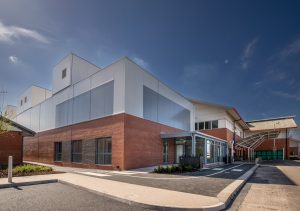
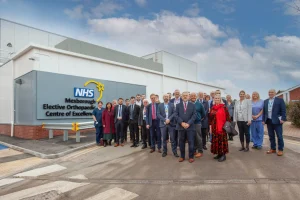
Hospitals consume large amounts of energy for heating, cooling, ventilation, lighting and medical equipment. With rising energy prices and pressure to reduce carbon emissions, hospital estates are under increasing demand to adopt sustainable solutions. Modular buildings offer a pathway for creating sustainable healthcare facilities that deliver lower energy costs while preserving high standards of care.
By designing features such as high-performance insulation, solar panels, smart building systems and efficient HVAC, sustainable modular buildings can reduce energy usage significantly compared with traditional builds. When sustainable healthcare facilities are properly planned, they deliver both environmental benefit and cost savings.
Overview of NHS Funding Options for Sustainability
The NHS has made significant commitments to sustainability and energy efficiency hospitals, providing a range of funding mechanisms to help trusts implement green projects. One of the key schemes is the Public Sector Decarbonisation Scheme, which has allocated over £1 billion to public sector organisations, including NHS hospitals. Projects funded in this way are expected to reduce NHS energy costs by more than £260 million annually.
Another major initiative is the £100 million funding from Great British Energy to support NHS trusts in installing solar panels and battery storage systems. This funding is designed to help hospitals generate renewable energy onsite and store it for peak use, reducing reliance on grid electricity and lowering energy bills.
Many trusts are also exploring financing options such as hire, lease or private investment partnerships to deliver sustainable infrastructure without significant upfront capital costs.
For example, some sustainable modular buildings are funded via flexible finance or hire models. This allows trusts to implement energy-saving solutions immediately while spreading the financial impact over time.
In addition, NHS Green Plans guide trusts in prioritising projects that offer measurable environmental and financial returns. Energy-efficient upgrades, low-carbon materials, and renewable energy projects are ranked based on expected cost savings, carbon reduction, and alignment with statutory net zero targets. Trusts can combine government funding with internal finance solutions to deliver sustainable healthcare facilities that are both effective and affordable.
Types of Sustainable Healthcare Facilities For Hospital Construction
Modular construction allows hospitals to deploy a variety of building types designed for energy efficiency and sustainability. Each type can be tailored to meet specific operational needs while incorporating features such as high insulation, smart controls, LED lighting, and renewable energy systems.
These facilities are flexible, scalable, and can be designed for both temporary and permanent applications. They help hospitals reduce operational costs while maintaining clinical performance.
The main types of sustainable modular buildings include modular temporary facilities, modular support services, and accessible surgical hubs. Each type has unique energy-saving and operational advantages that make them ideal for modern NHS estates.
Modular Temporary Facilities
Modular temporary facilities are units that hospitals deploy during renovation or as surge capacity. Even though temporary, they can incorporate sustainable features such as efficient LED lighting, solar PV panels or battery storage, and high-insulation panels. Their temporary nature does not preclude them from being built to high energy performance standards.
Because they are prefabricated, many components can be tested off-site to ensure they meet energy efficiency hospital standards, which reduces waste and ensures that thermal performance is optimised. Using sustainable materials and factory-controlled quality improves airtightness and reduces thermal bridging, thereby reducing heating and cooling demand.
When designed well, modular temporary facilities can significantly cut energy costs during their use. After their temporary role, many components can be repurposed or relocated, further supporting sustainable healthcare facilities by reducing overall embodied carbon.
Modular Support Services
Support services in hospitals include diagnostic centres, staff facilities, utilities and storage. Modular support service buildings are often less complex structurally but can still consume a lot of energy if not designed efficiently.
Energy savings in modular support units come from features such as passive solar design, LED lighting, occupancy sensors, intelligent building management systems (BMS) and efficient HVAC systems. These features ensure support units do not waste energy when idle or lightly used.
Using solar panels and battery systems on support services facilities means that part of the energy demand can be offset by renewable generation. With recent NHS funding, such as the Great British Energy initiative, many trusts can apply to cover these installations.
Accessible Surgical Hubs
Surgical hubs are dedicated units for elective, low complexity surgery. They are often ring-fenced with staff and resources, which helps with both productivity and energy performance. Studies from Health.org show surgical hubs increase elective surgery volumes by about 22% in their first years, helping reduce delays and unused capacity.
If built using modular methods, surgical hubs can be equipped with highly efficient building envelopes, optimised ventilation, heat recovery and renewable power systems to deliver low energy use per procedure. Because they often serve high throughput volumes, even small savings per hour from LED lighting, efficient HVAC and smart controls multiply significantly.
Modular surgical hubs, as sustainable healthcare facilities, can benefit significantly from NHS programmes and funding. Where trusts are installing these hubs, integrating renewables, efficient insulation and smart energy management can reduce overheads and improve cost predictability.
How NHS Trusts Prioritise Environmental Upgrades
NHS Trusts are increasingly required to produce Green Plans that align with statutory emission targets and net zero commitments.
In practice, trusts prioritise measures with high return on investment, including solar panels, battery storage, LED lighting, efficient HVAC and improved insulation. Projects funded under PSDS or via Great British Energy are selected for their economic and environmental impact.
Procurement and finance models also play a role. Trusts often partner with external providers or consider hire and lease models for infrastructure. For example, modular facilities or renewable installations may be financed through cost-spreading hire services, or by using specialist finance.
Case studies show trust estates teams plan environmental upgrades with measurable metrics such as carbon reduction, energy savings and payback periods. For example, Hampshire & Isle of Wight Trust expects over £380,000 savings per year from solar power and battery systems alone.
Sustainable healthcare facilities built using modular construction offer hospital estates the opportunity to reduce energy costs while accelerating improvements. Features such as renewable energy, efficient envelopes, LED lighting, smart controls and high insulation all contribute to lowering operational costs.
With NHS funding options available, including the Public Sector Decarbonisation Scheme, Great British Energy funds and flexible finance or hire solutions, trusts can make these investments without excessive capital pressure.
Using modular construction supports sustainable healthcare facilities that are greener, cost-efficient, resilient and aligned with long-term net zero goals. Energy efficiency hospitals that embrace these features now are not only reducing bills today but also helping their facilities remain sustainable and efficient in the future.