By Alan Wilson, Managing Director
Modern Methods of Construction (MMC) are being increasingly embraced within the public sector, with more and more organisations recognising the need for new, innovative construction solutions.
Within healthcare, we’ve delivered countless projects that properly demonstrate the impact offsite construction and modular delivery can have in providing both time and cost-effective solutions.
MMC including offsite and modular construction are innovative solutions that help to combat rising challenges within healthcare such as budget cuts and capacity requirements. MCH’s “True Offsite Construction” approach brings about countless benefits that resolve some of the pain points often caused by a traditional construction approach.
What is MCH’s “true offsite” construction?
Offsite manufacturing can be defined as a building designed and constructed under factory conditions, away from the end installation site. This involves the development, design, planning, and subsequent manufacture of construction components within a controlled factory environment.
Most crucially, our offsite construction includes the pre-assembly of these elements, typically up to the point at which they are 90% complete, before they are installed on-site at their final location.
What are the benefits of offsite construction?
- Time-saving
Finding a quick solution to challenges that are impacting patient care is paramount.
With current NHS waiting lists at an all-time high of more than six million, busy NHS trusts need fast solutions to help expand their surgical capacity and ensure patients get the care they need without disruption to current care delivery.
The design and delivery of a modular facility built off-site, is significantly quicker than that of a traditional build, with the entire facility delivered, installed and commissioned in a matter of weeks, less than half the overall project time of a traditional approach, alongside ground works being carried out on site.
- Cost predictability and budget flexibility
Budget constraints, securing funding and fast turnaround times within the public sector are well known contentions when it comes to improving much needed services, especially within the NHS.
Modern Methods of Construction such as modular off site construction, provide much needed flexibility when it comes to up-front capital and cash flow management with fixed build programmes, cost predictability, as well as the options of hire arrangements over fixed terms agreements.
Modular healthcare facilities financed via flexible Hire or Managed Service agreements allow the Trust to combine the full costs of the project, including the design, enabling works, installation, and subsequent upkeep of the facility into a monthly fee. This can also extend to the inclusion of medical equipment allowing the hospital to benefit from their new facility straight away, with payments being made every month.
Ensuring projects are completed within the timescales means budgets are adhered to and builds do not overrun. Modular constructions are designed, built, and checked for quality standards before arriving to site ensuring install and opening is kept to schedule, this is a significant benefit for the NHS as they can effectively manage patient and staff schedules and plan to adhere to targets set by the Trust.
- Making an environmental impact
Embodied carbon in the UK, which is carbon emitted by the production and transport of materials during a building’s construction, is between 40 and 50 million tonnes each year – more than aviation and shipping combined.1
Ensuring any expansion of an existing building is carried out with minimal environmental impact is always a key driving factor for any construction scheme; having a “factory first” approach to construction can improve the sustainability of a facilities expansion, with research showing that modular construction emits 45% less embodied carbon than traditional construction. 1
Modular builds are mostly made from steel infrastructure rather than a fixed concrete structure. Facilities that are constructed in one place by one partner also provides better control of waste materials and one single delivery to site with a completed modular unit means less embodied carbon is produced.
The sustainability of a modular build also means improvements are relatively straightforward and cost-effective, especially within the healthcare and the NHS where equipment needs to be upgraded often and hospitals need to be reactive to changing environmental pressures and the demand for space these pressures bring. Providing the flexibility in infrastructure means investments made in modular builds have essential longevity.
- Quality control
Having elements of a facility being constructed offsite may bring questions on quality management and overseeing the control of the build, especially in the health sector where quality and health and safety are paramount for patient and staff wellbeing.
One of the main benefits of modular offsite construction is the factory in which facilities are built. Stringent processes and regulations are already in place with the health and safety checks of pipework, electrical wiring, and quality checks being completed before the unit is delivered to the site, ensuring on the highest of quality structures are installed.
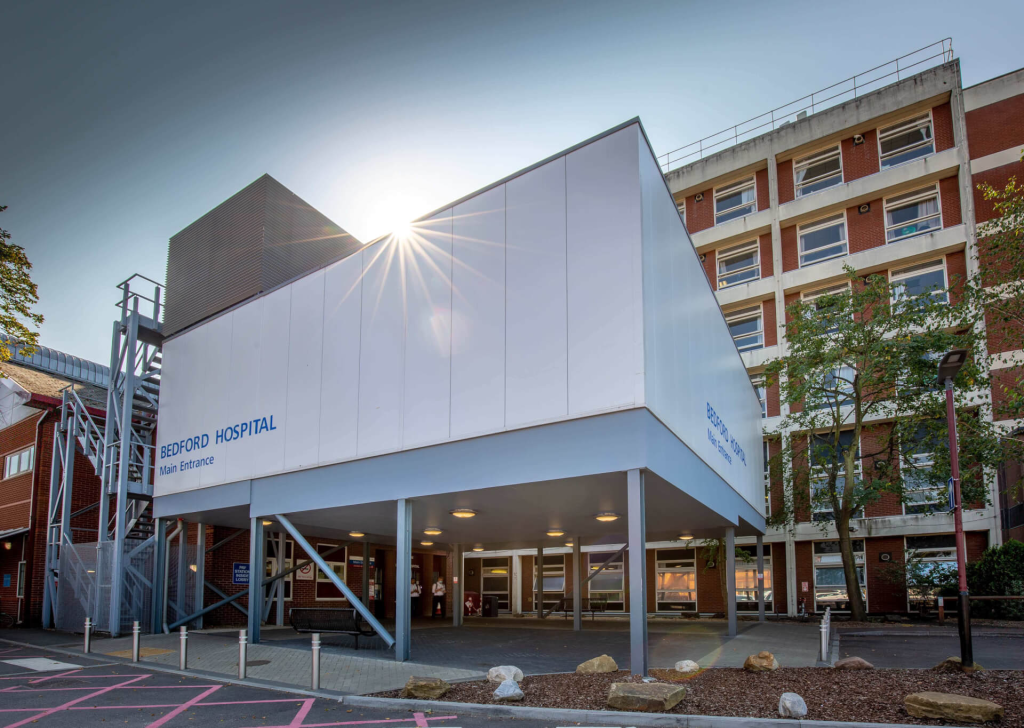
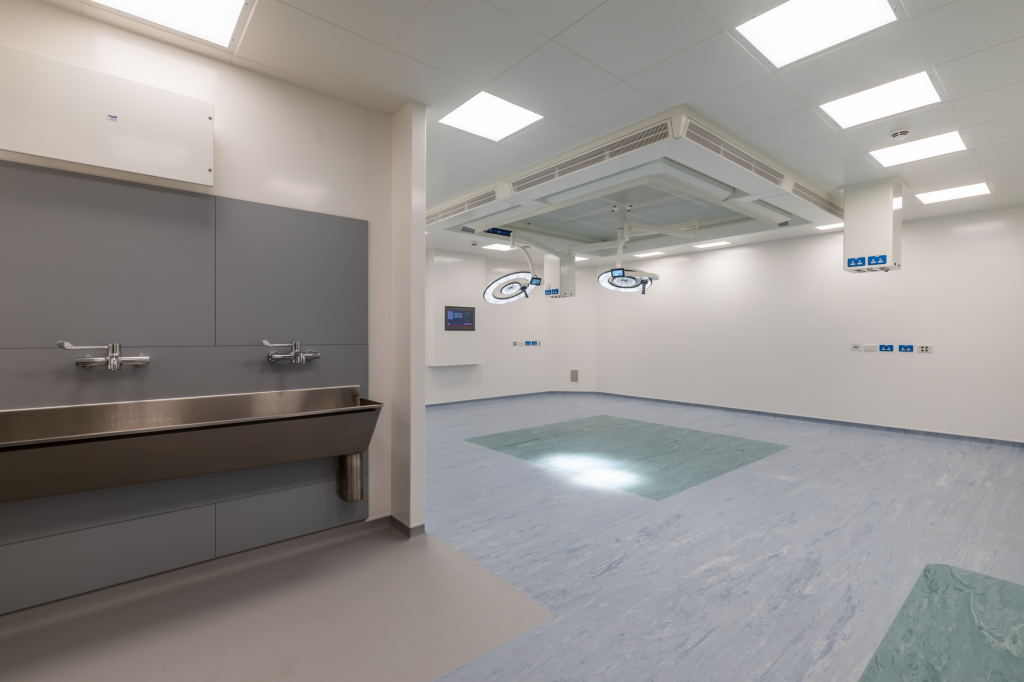
Most patients and staff would not realise they were inside a modular operating theatre or ward, rather than a traditionally built facility. The equipment and functionality of the build does not differ nor do the standards of the construction.
All MCH buildings are designed to the relevant HTM and HBNs to ensure they are seamless addition to a hospital estate, providing a safe environment for healthcare workers to complete their vital work. Thanks to our manufacturing partner, ModuleCo, our facilities are well-renowned for their high specification, designed to eliminate vibration, and provide a consistent temperature and controlled air regime to ensure a safe, surgical environment.
How are modular facilities built?
There’s no room for compromise on the quality of healthcare facilities, which is why we’re proud to provide industry-leading modular buildings that are designed to optimise patient experience, made possible via a more affordable flexible hire agreement option.
Working closely with key NHS decision-makers, including the clinical staff who will be working in the space, we take the time to understand the daily challenges faced by healthcare workers to develop a facility that will respond to these.
From the initial output of the design meetings, the modules are then designed and constructed in a factory environment, undergoing rigorous testing to ensure they are fully compliant with the agreed specification and quality checked prior to delivery.
They are installed on-site within a few days, on average, and usually over a weekend minimising disruption to a live hospital site. From here they are typically made patient ready within a matter of weeks.
How MCH provides a “True Offsite Construction” approach to modular construction
We place the wellbeing of patients at the core of what we do, ensuring that their quality of care is always the priority when developing and delivering a new, modular healthcare project.
We recognise the challenges faced by NHS Trusts around the UK and understand the importance of ensuring that projects are delivered on time, on budget and – most importantly – with minimum disruption to daily activity.
Through a “Factory-First” approach, whereby up to 90 per cent of works are completed in a controlled factory environment, modules arrive on-site fully assembled, QA audited and PDI compliance checked. This offers the most time and cost-efficient, clean, low- risk way of achieving world-class healthcare capacity via an off-site modular approach. All modules have robust, structural frames which allow for multi-storey deployments, and benefit from a 60-year structural design life.
Having worked within the healthcare sector for most of my career, I’ve come to know many healthcare professionals and can fully appreciate the challenges they face in their daily working lives.
Most crucially, NHS Trusts need quick, cost-effective solutions that don’t disrupt the daily running of a busy hospital site. This is where a True Offsite approach can make a profound difference.
Shaun Mann, Procurement Manager, Capital, Estates and Facilities at University Hospitals Plymouth NHS Trust, said:
“ModuleCo Healthcare designed and delivered three modular theatres for us at University Hospitals Plymouth NHS Trust: one single and one twin theatre.
“We are really impressed with the quality of the facilities and feedback from staff has been extremely positive, with praise for the clean, bright, and open space.
“For us, a modular approach was attractive as it allowed us to add a bespoke, modern, and up to date facility without spending a fortune changing the infrastructure of the building.
“Not only that, but the added benefit of minimal disruption to the site meant that the hospital could continue to operate as normal.”
Integrating flexible finance options
Alongside offering an optimum service for the overall manufacture and delivery of healthcare facilities, we also recognise the importance of considering financial limitations that NHS Trusts may face.
Via bespoke Hire agreements, we can implement cost-effective solutions that don’t compromise on a single aspect of the overall project delivery. This ultimately means that hospitals can benefit from state-of-the-art facilities and equipment straight away, without needing to find the upfront capital.
At a time when additional capacity is needed more than ever, it’s time for NHS decision-makers to embrace innovative approaches to healthcare construction and financing to ensure that patient care remains at the fore.
Find out more about some of the modular projects we’ve successfully delivered via our case studies page, and get in touch to find out how we could support you.
- https://www.building.co.uk/news/modular-construction-emits-45-less-carbon-than-traditional-methods-report-finds/5117779.article